
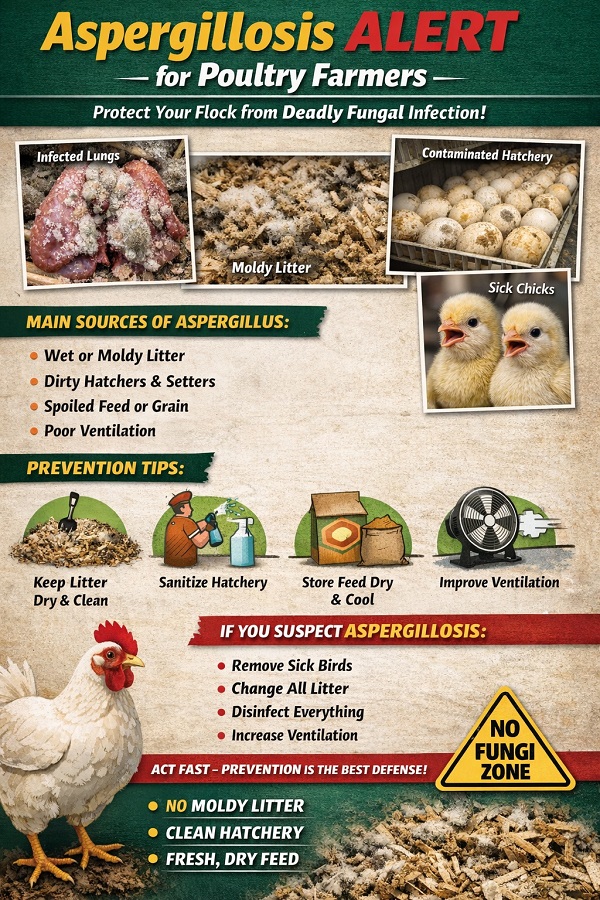
Aspergillosis is one of the most underestimated killers in poultry farming. It doesn’t spread bird-to-bird like a virus, yet it can wipe out chicks quickly—especially in hatcheries and brooders. Understanding where it comes from, how it enters your system, and how to stop it is critical for protecting flock performance and hatchability.
What Is Aspergillosis?
Aspergillosis is a fungal respiratory disease caused mainly by Aspergillus fumigatus. The fungus produces microscopic spores that birds inhale, not ingest. Once inside the lungs or air sacs, the spores grow and form fungal plaques, reducing oxygen exchange.
Young chicks are extremely vulnerable because:
- Their immune system is immature
- Their lungs and air sacs are still developing
- They breathe faster than adult birds
Common Signs in Chicks and Growers
In Chicks (Most Severe)
- Sudden deaths with little warning
- Gasping or open-mouth breathing
- Weak, lethargic chicks that fall behind
- Poor hatch-out or high first-week mortality
In Older Birds
- Laboured breathing
- Reduced feed intake
- Poor growth and feed conversion
- Chronic respiratory distress
⚠️ Antibiotics do not work—this is a fungal disease.
Where Does Aspergillus Come From?
Aspergillus spores are everywhere in the environment, but disease only occurs when birds are exposed to high spore loads.
Main Sources on Poultry Farms
1. Moldy Litter or Bedding
- Wet wood shavings
- Old litter reused without proper drying
- Straw or sawdust stored in damp conditions
2. Contaminated Hatchery Environment
- Dirty setters and hatchers
- Poor air filtration
- High humidity with organic dust
- Mold growing on walls, ceilings, or fans
3. Moldy Feed or Ingredients
- Feed stored in warm, humid conditions
- Spoiled grain or cracked maize
- Condensation inside feed bins
4. Poor Ventilation
- High ammonia damages respiratory lining
- Stagnant air allows spores to accumulate
Why Hatcheries Are High-Risk Zones
Hatcheries create the perfect storm for Aspergillus:
- Warm temperatures
- High humidity
- Organic dust from eggs and fluff
If one hatcher becomes contaminated, thousands of chicks can be exposed within hours.
Preventing Aspergillosis (The Most Important Part)
1. Litter and Bedding Control
- Use dry, fresh litter only
- Never use musty or clumped shavings
- Store bedding off the floor and under cover
- Discard any litter with visible mold
2. Hatchery Hygiene (Non-Negotiable)
- Wash and disinfect setters and hatchers after every cycle
- Use fungicidal disinfectants, not just bacterial ones
- Clean fans, vents, and ducting
- Keep humidity controlled—avoid condensation
3. Ventilation Management
- Ensure constant air exchange
- Remove ammonia buildup
- Avoid dead air zones in brooders and hatchers
4. Feed Management
- Buy feed from reputable suppliers
- Store feed in cool, dry conditions
- Empty and clean feed bins regularly
- Never feed moldy or caked feed
What to Do If You Suspect Aspergillosis
Immediate Actions
- Remove affected birds (they won’t recover well)
- Improve ventilation immediately
- Remove and replace all suspect litter
- Clean and disinfect the environment thoroughly
Can Birds Recover?
- Chicks: Recovery is poor once lungs are damaged
- Older birds: Mild cases may stabilize if exposure stops
There is no effective treatment once fungal plaques are established. Prevention and early intervention are the only real solutions.
Disinfection Tips That Actually Work
- Use disinfectants labeled effective against fungi
- Fogging works better than spraying for air systems
- Heat + drying after cleaning kills spores
- Avoid organic matter before disinfection—clean first
Key Takeaways for Poultry Farmers
✔ Aspergillosis is an environmental disease, not contagious
✔ Moisture + organic matter = danger
✔ Hatcheries are the highest-risk area
✔ Prevention costs far less than chick losses
✔ Clean, dry, well-ventilated systems save birds