
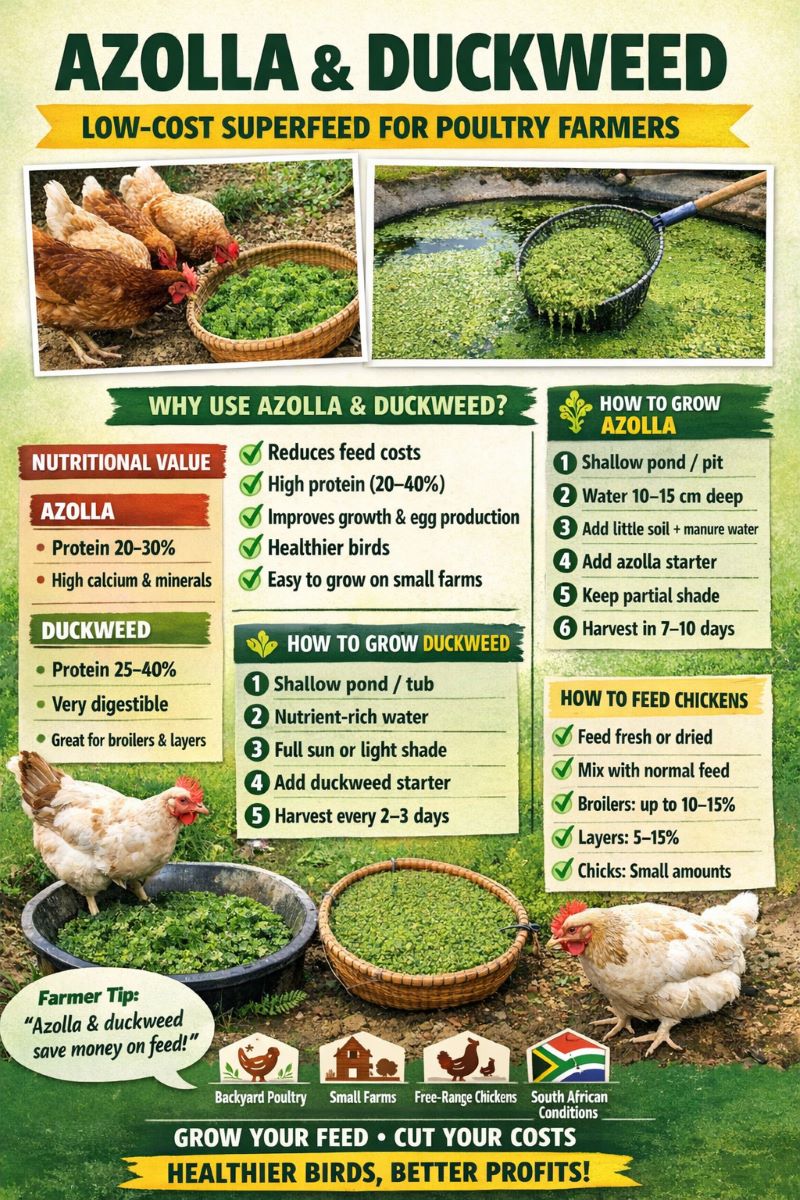
Feed costs are the biggest expense in poultry farming, especially for small-scale farmers. Luckily, nature offers two powerful, fast-growing plants that can help reduce feed bills while improving bird health: Azolla and Duckweed.
These water-grown plants are easy to grow, require very little space, and are perfectly suited for South African backyard and small commercial poultry systems.
What Is Azolla and Duckweed?
Azolla
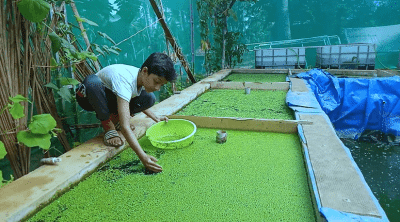

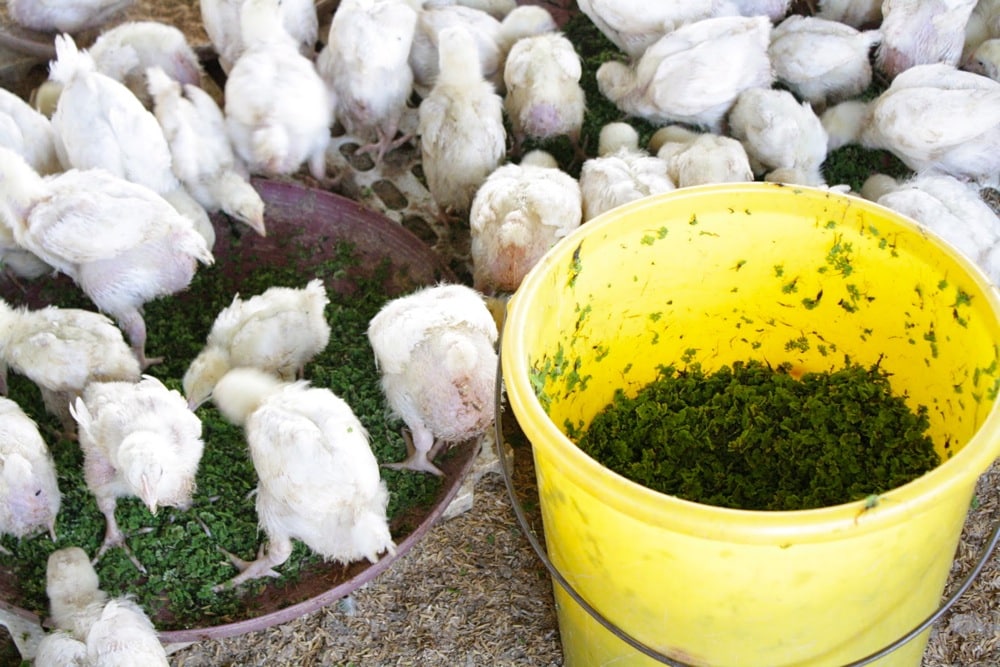
Azolla is a floating water fern that grows rapidly in shallow water. It naturally fixes nitrogen, making it high in protein and minerals.
Typical nutritional value:
- Crude protein: 20–30%
- Rich in calcium, iron, amino acids, and vitamins
- Excellent supplement for broilers, layers, and indigenous chickens
Duckweed


Duckweed is one of the fastest-growing plants on earth. Under good conditions, it can double its mass in 2–3 days.
Typical nutritional value:
- Crude protein: 25–40%
- Highly digestible
- Very palatable to poultry
Benefits of Azolla and Duckweed in Poultry Feeding
1. Lower Feed Costs
Both plants can replace 5–20% of commercial feed, depending on bird age and production stage. That means real savings on maize and protein concentrates.
2. Improved Growth and Egg Production
Farmers commonly report:
- Better weight gain in broilers
- Improved egg size and yolk colour in layers
- Stronger shells due to higher calcium intake
3. Healthier Birds
Azolla and duckweed support:
- Better gut health
- Improved immunity
- Reduced stress in free-range systems
4. Ideal for Free-Range and Small-Scale Systems
Birds love fresh green feed. These plants work perfectly for:
- Backyard poultry
- Small broiler units
- Indigenous and dual-purpose chickens
High-Level Steps to Grow Azolla on a Small Poultry Farm
Step 1: Prepare a Growing Area
- Use a shallow pit, plastic-lined pond, old bath, IBC cut in half, or cement dam
- Ideal depth: 10–15 cm
Step 2: Fill With Water
- Use borehole, rainwater, or tap water
- Avoid chlorinated water (or let it stand 24 hours)
Step 3: Add Nutrients
- Small amounts of:
- Well-decomposed chicken manure OR
- Cow dung slurry
- Add a little soil for minerals
Step 4: Introduce Azolla Starter Culture
- Spread evenly on the water surface
- Keep in partial shade (50–70%)
Step 5: Harvest Regularly
- Start harvesting after 7–10 days
- Remove only ⅓ at a time to allow regrowth
High-Level Steps to Grow Duckweed Locally
Step 1: Container or Pond Setup
- Any shallow container works
- Full sun or light shade
Step 2: Nutrient-Rich Water
- Duckweed loves nutrients
- Use diluted poultry manure water or pond water
Step 3: Add Duckweed Starter
- Spread across the surface
- Ensure water is calm (no strong movement)
Step 4: Fast Growth & Harvesting
- Harvest every 2–3 days
- Skim the surface gently using a net or sieve
How to Feed Azolla and Duckweed to Poultry
- Feed fresh or sun-dried
- Mix with normal feed or offer separately
- Recommended inclusion:
- Chicks: small amounts only
- Growers & layers: 5–15% of daily intake
- Broilers: up to 10–15%
⚠️ Always introduce gradually to avoid digestive upset.
Final Thoughts
Azolla and duckweed are powerful tools for small-scale poultry farmers looking to:
- Cut feed costs
- Improve bird health
- Increase farm sustainability
With minimal investment and simple management, these plants can turn unused water space into high-quality protein for your chickens.
If you’re serious about lowering costs and becoming more self-reliant, azolla and duckweed are well worth trying.