
One of the most common questions in any hatchery is:
“How long can chicks safely stay in the hatcher after they hatch?”
Handled correctly, chicks can remain in the hatcher for a short period without harm. Handled poorly, the same period can lead to dehydration, overheating, piling (stampedes), and early chick losses.
Let’s break it down step by step.
How Long Can Chicks Stay in the Hatcher?
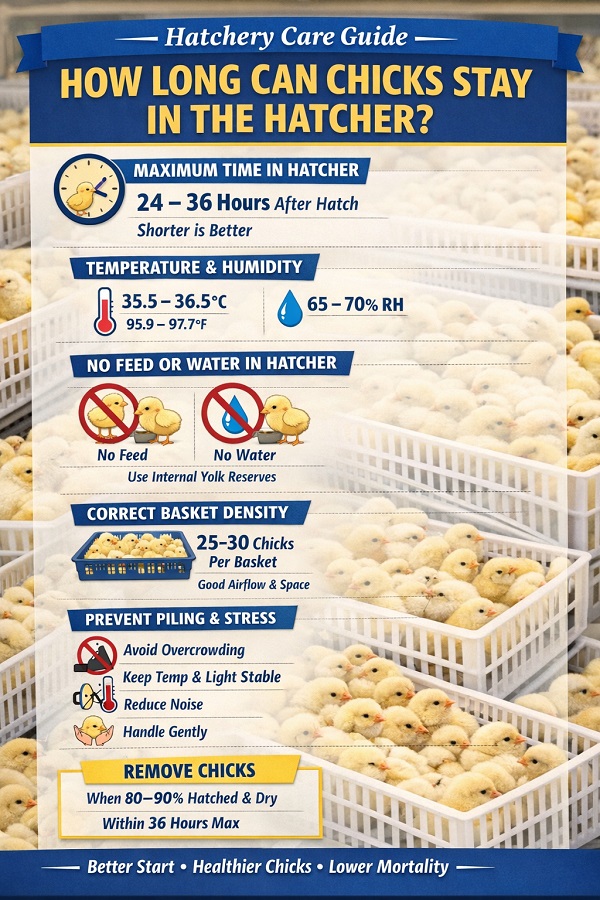
Healthy, fully hatched chicks can safely remain in the hatcher for:
✔ 24 to 36 hours after hatch
This is possible because:
- Chicks absorb the yolk sac just before hatch
- The yolk provides energy, water, and nutrients for the first day of life
However, this does not mean longer is better.
Best Practice
- Pull chicks as soon as the majority are dry and fluffy
- Avoid waiting for the last few late hatchers if it delays chick removal too much
Ideal Temperature in the Hatcher After Hatch
Once chicks are out of the shell, their needs change dramatically.
Recommended Air Temperature
35.5 – 36.5 °C (95.9 – 97.7 °F)
Why this matters:
- Too hot → chicks pant, dehydrate, weaken
- Too cold → chicks huddle, pile, risk suffocation
Chick Behaviour Is Your Best Thermometer
- Comfortable chicks: evenly spread, quiet
- Too hot: panting, wings away from body
- Too cold: loud chirping, tight clustering
Ideal Humidity After Hatch
Humidity control is just as important as temperature.
Recommended Relative Humidity
65 – 70% RH
Why humidity matters:
- Low humidity → rapid dehydration
- High humidity → poor down drying, increased bacterial risk
Once most chicks are dry, humidity can be allowed to drift slightly lower, but never to extremes.
Do Chicks Need Water and Feed in the Hatcher?
No.
Chicks should not be given water or feed inside the hatcher.
Here’s why:
- Newly hatched chicks rely on the internal yolk sac
- Feed in the hatcher increases contamination risk
- Wet surfaces raise bacterial and fungal growth
What’s More Important Than FeedCorrect Spacing in Hatching Baskets (Avoiding Stampedes)
Overcrowding is one of the biggest causes of:
- Piling
- Suffocation
- Leg injuries
- Weak or dead chicks
Recommended Stocking Density
25 – 30 chicks per standard hatching basket
(±60 × 40 cm basket)
For heavier broiler strains:
- Stay closer to 25 chicks per basket
Key Spacing Rules
- Chicks must be able to lie flat without climbing over each other
- Basket walls should allow good airflow
- Avoid stacking baskets too tightly during peak hatch
Why Stampedes (Piling) Happen
Chicks pile when they are trying to escape stress:
- Excessive heat
- Cold drafts
- Loud noise
- Bright light
- Overcrowding
Prevention Tips
- Maintain stable temperature
- Keep lighting soft and even
- Avoid sudden movements or banging
- Never overload baskets “just for a short time”
When Should Chicks Be Removed?
Ideal Chick Pull Time
- When 80–90% of chicks are hatched and dry
- Before early hatchers exceed 30–36 hours of age
Delaying removal:
- Dehydrates early chicks
- Weakens navels
- Reduces first-week performance
Final Takeaways
✔ Chicks can remain in the hatcher up to 36 hours, but shorter is better
✔ Maintain 35.5–36.5 °C and 65–70% humidity
✔ No feed or water in the hatcher
✔ Limit baskets to 25–30 chicks
✔ Good spacing prevents piling, losses, and weak starts